There are moments when an entire industry gets dragged into the light without its makeup on, and this…is one of those moments.
An indie debut author, Mia Ballard, gets traction & a Big Five publisher comes calling. Things are going well, she’s arrived. And then, boom! The deal gets yanked because AI generated prose. Not brainstormed with AI, or outlined with AI, or pressure-tested with AI.
Generated.
That is the part people keep trying to blur, soften, or dress up in a nicer outfit (by calling it “AI-Assist”). But the law is not confused, even if half the internet is.
According to copyright and trademark lawyer Kelley Way, the issue is brutally simple: “The copyright office… won’t give copyright protection to AI-generated content,” and publishers know it. Which means, in plain English, if most of the book was generated by AI, the publisher does not have exclusive rights worth investing in. Or, as Kelley put it, when seventy percent of a book can be copied freely, “they no longer have an incentive to put money behind it anymore.”
“But I spent so much time prompting?” Yes, but you didn’t write the sentences….a software did.
Writers keep trying to make this more complicated than it is
I have been saying this for a long time.
The litmus test is not hard.
Who wrote the prose?
Who wrote the actual sentences?
Because copyright does not protect your ideas, it protects the expression of those ideas.
Kelley said it cleanly in the interview: “Ideas don’t get copyright protection. The creative expression of those ideas do.” You do not own the idea of the book what you own is the way you wrote that expression of the idea. . And if the expression came from an LLM, you have a problem. A real one: chain-of-title problem.
This is where everybody starts playing word games
Because “AI-generated” carries stigma, people want to call everything “AI-assisted.”
No. Absolutely not.
If you used AI to brainstorm, ideate, pressure test your plot, explore character possibilities, or get clarity on structural weaknesses, that is assistance. If you had AI generate paragraphs, or chapters of prose, that is generation. Period. Those are not the same thing, and pretending they are the same thing is how people end up strolling into a legal woodchipper with a smile on their face.
In the interview, I put it plainly, and Kelley agreed: if AI is writing the prose for you, that is not human expression. Kelley reinforced the governing principle in even simpler terms: “You have to be human for your work to get copyright protection.”
You have to be human.
Not “human adjacent.”
Prompting is not authorship, no matter how romantic people get about it
A lot of writers say, “But it was my idea.”
That still does not make the generated prose yours in the way copyright requires.
The Copyright Office guidance discussed in the episode says prompts alone do not provide sufficient control. Kelley explained why: if you do not know what exact output the system will produce, then the system is making creative decisions you did not make.
And this is where people get emotionally attached to their own delusion.
They want the prestige of authorship without doing the authorship.
That is the part no one wants to say out loud and why so many AI Gen authors have adopted the term AI-Assist. Because it sounds better, doesn’t it?
Publishers are not being mean. They are being rational.
A traditional publisher is in the business of acquiring assets.
If a meaningful chunk of the prose cannot be exclusively protected, the value of the asset collapses. Kelley said it directly: publishers may publish work containing AI-generated material, but they want to know it is there because they cannot protect those portions.
Let me translate that into normal-people English.
Why would a publisher spend serious money acquiring, editing, printing, distributing, and marketing a book if the most commercially relevant part of it can be copied without much legal consequence?
The part no one wants to hear: craft is still the issue, too
Even if we parked the copyright problem for a second, there is another problem that too many people skip right past.
Most AI-generated novels have many craft challenges.
In the interview, I talked about reading an AI-generated manuscript by someone I knew. The problem was not just the legal exposure. The problem was the reading experience was lacking. There was no real scene architecture. No texture. No felt setting. No proper buildup. No lived-in emotional choreography. It read like a stream of consciousness drafted by a machine that had seen books from a distance and was trying its best.
There is a right way to use AI, and writers should stop being scared of that
This is the piece that frustrates me most.
Because what should happen right now is not a moral panic where serious writers swear off AI entirely. That would be ridiculous. Used properly, AI is an extraordinary tool for writers.
Kelley said as much. She talked about using it for research, brainstorming, logical testing of plotlines, even certain forms of editing support, as long as the writer remains the one choosing the final language and not simply copying and pasting prose out of the machine. She summed it up with a rule of thumb that I wish more writers would adopt: “Don’t let it write for you.”
Do not use it to do the very part of the job the law rewards. Also, the hardest part of the job! The writing.
This case matters because it is the first time the bill came due in public
That is why this story hit so hard - and it has been so timely.
For the last couple of years, people have been floating around the edges of this issue saying things like, “Well, maybe nobody will care,” or “Maybe the industry will adjust,” or “Maybe it is all a gray area.”
Maybe. But for now, that is not the case. Sure, this could go either way in the future, but at the moment, it looks likely that the status quo will hold.
Here is the part I need writers to understand
You are absolutely free to generate books with AI and sell them.
That is your lane if you want it. There is nothing inherently illegal about putting that kind of work on the marketplace. But do not confuse “allowed to sell” with “protected as authorship.”
And do not confuse “available on Amazon” with “defensible rights position.”
Those are not the same thing.
If you want traditional publishing or serious rights conversations, act accordingly. But stop pretending all roads lead to the same place. They do not.
The future belongs to the writers who learn the distinction
We are standing at the front edge of a literary renaissance. Not because AI can write novels for people because frankly, that is the least interesting use case in the room.
We are standing at the edge of a literary renaissance because writers now have tools that can help writers think better, structure better, revise better, and compete harder without surrendering the one thing that matters most. Their human expression - their prose.
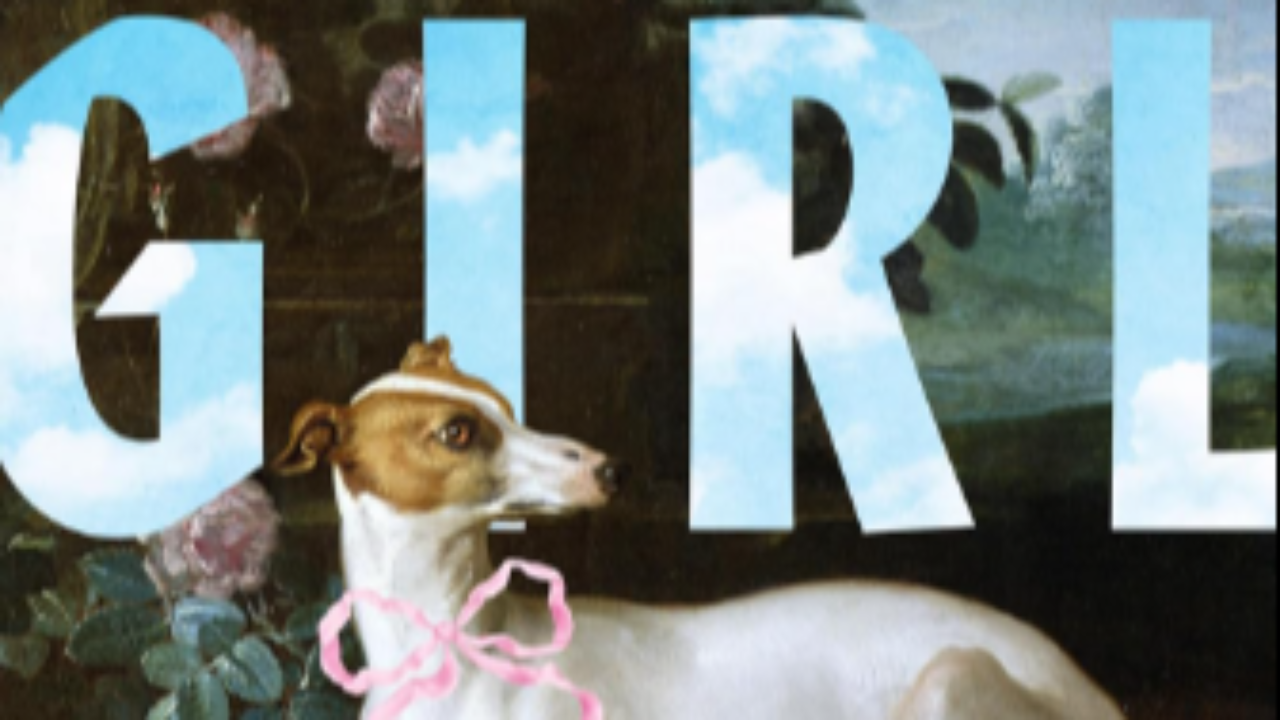
And if the Shy Girl fiasco did anything useful, it is this: it forced that line into public view.
At last. A win for human creativity.